
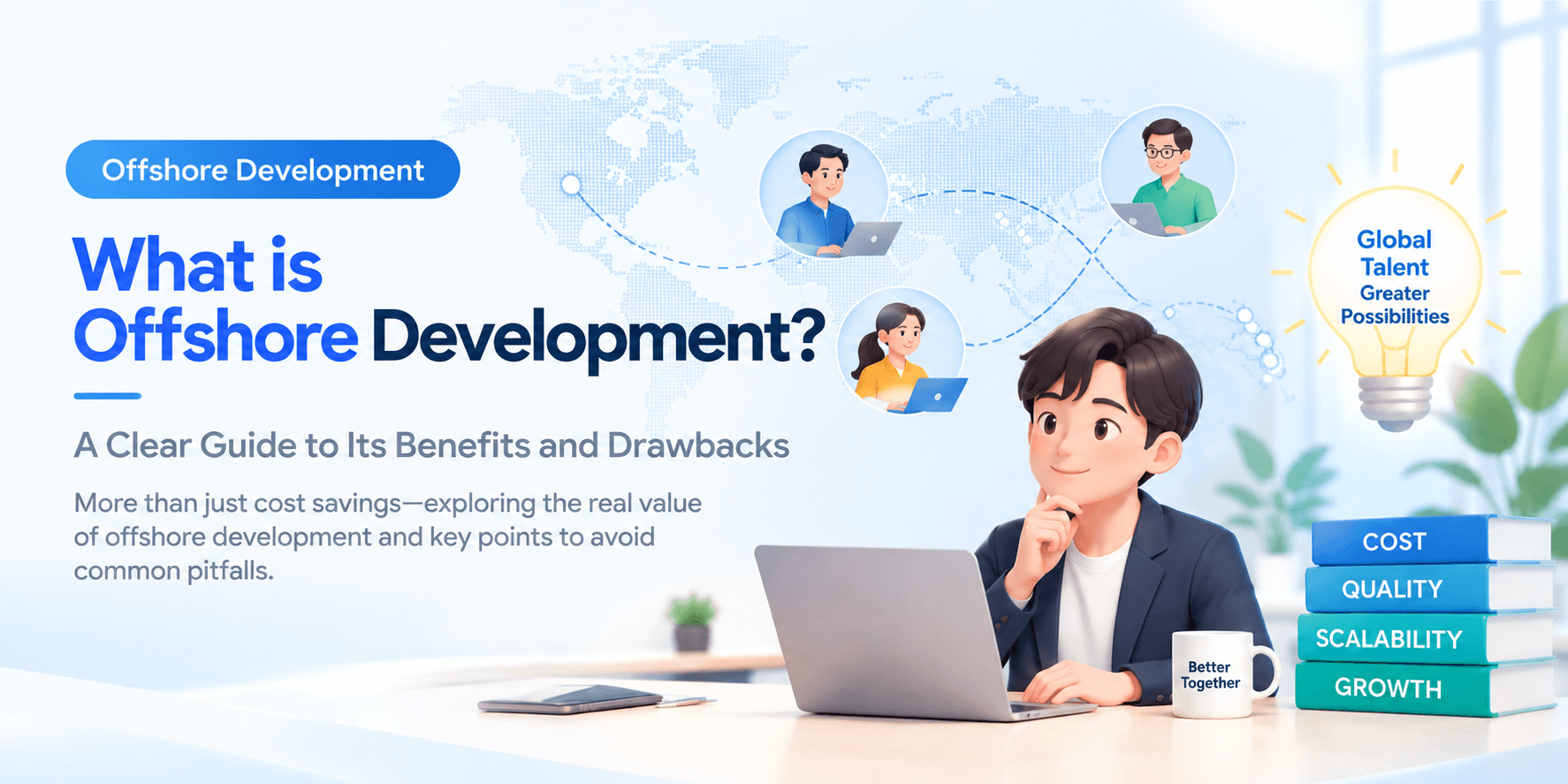
“We want to reduce development costs.” “We want to address the shortage of engineers in Japan.” — Against this backdrop, more and more companies are considering offshore development. At the same time, concerns such as “What about the language barrier?” and “Will the quality be reliable?” remain common. In this article, we provide a clear overview of offshore development, covering how it works, its key benefits and drawbacks, and the important points to consider when evaluating it.
What Is Offshore Development?
Offshore development is a development approach in which system or software development is outsourced to companies or development centers overseas. In recent years, Southeast Asian countries, particularly Vietnam, have increasingly become popular development destinations. This is supported by factors such as the growth of IT talent development and the relatively small time difference with Japan.
Key Benefits of Offshore Development
- Optimized development costs By taking advantage of differences in labor costs, companies can secure more development resources within the same budget.
- A large pool of engineering talent Even for roles and technical areas where hiring is difficult in Japan, companies can more easily secure the talent they need from the outsourcing partner’s talent pool.
- Flexible Development Capacity Another key advantage is the ability to flexibly scale and adjust the development team according to the project’s size and phase.
Key Drawbacks and Risks of Offshore Development
- Communication overhead Differences in language and business practices can sometimes make it take longer than expected to align requirements and ensure a shared understanding.
- Inconsistent quality The quality of deliverables may vary depending on the outsourcing partner’s development structure and management capabilities.
- Added management burden If progress management and specification adjustments are left entirely to the outsourcing partner, there is a risk that the project may stall.
Key Point: The success of offshore development depends not only on cost savings, but also on having a development structure that enables requirements to be communicated accurately and quality to be maintained consistently. Before starting a project, it is important to confirm whether a Bridge System Engineer (BrSE) is available, how responsibilities are divided between the Japan and Vietnam teams, and how communication will be managed.
Three Things to Check Before You Start
When considering offshore development, we recommend aligning expectations in advance on the following three points.
- Communication structure Check whether a Japanese-speaking Bridge System Engineer (BrSE) is available, as well as the frequency of regular meetings and the communication process.
- Quality assurance process Confirm how review and testing processes are structured.
- Contract structure Confirm whether the contract type, such as quasi-mandate or fixed-price contracting, is appropriate for the nature and objectives of the project.
In Summary
When used appropriately, offshore development can provide significant benefits in terms of both cost efficiency and access to development resources. However, if the development structure or communication process is not properly designed, the project may fail to deliver the expected results. Establishing a clear communication structure and robust quality management process from the early stages of implementation is key to successful offshore development.