
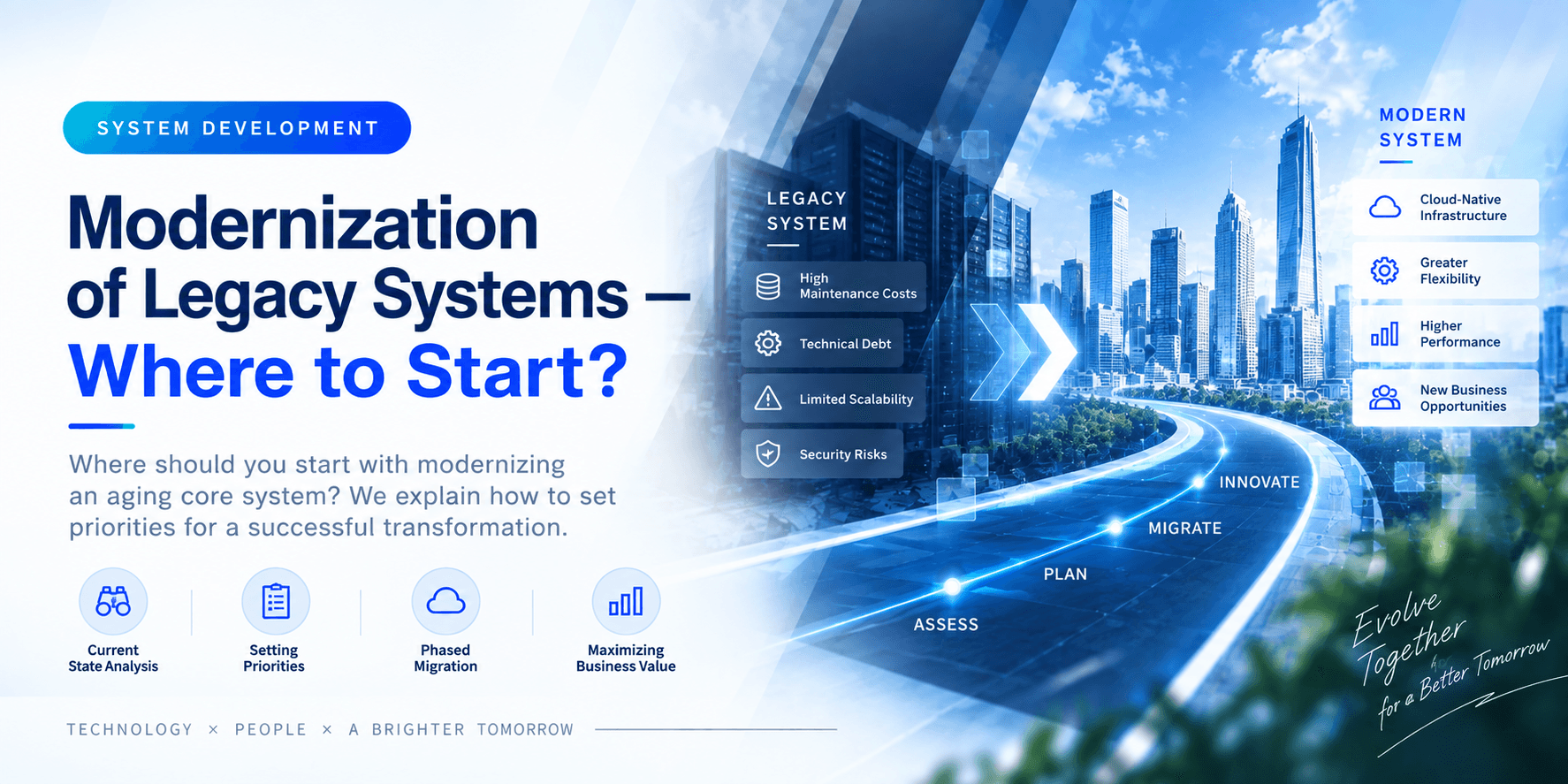
Many companies find themselves struggling with an aging core system, thinking "it's time for a renewal, but I don't know where to start." This article explains how to prioritize when modernizing a legacy system.
Common Challenges with Legacy Systems
- Black-boxing — Specification documents no longer exist, and maintenance has become difficult as knowledgeable staff have left the company.
- Accumulated technical debt — Fewer engineers can work with old languages and frameworks, driving up maintenance costs.
- A widening gap with business speed — Adding new features or integrating with external systems takes too long, holding back business growth.
How to Prioritize Modernization
- Start with the areas that have the biggest impact — Prioritize evaluating the features with the highest business impact and usage frequency.
- Make high-risk areas visible — Identify the parts that have become black-boxed and the parts where a failure would have major consequences.
- Plan a phased migration — Rather than a full replacement, also consider an approach that modernizes feature by feature in stages.
Key point: Modernization isn't about "rebuilding everything." Prioritizing based on business impact and risk, and proceeding in stages, is the key to avoiding failure.
An Example Approach
- Take stock of the current system's structure and specifications (and document them).
- Prioritize target areas based on impact and risk.
- Develop a phased design and migration plan, and build a structure together with an external partner.
Summary
The larger the scale, the more important it becomes to judge "where to start" when modernizing a legacy system. Starting with an inventory of the current state and a risk assessment, then proceeding in stages, lets you steadily modernize the system while limiting the impact on the business.